

Bonus Depreciation: Tax Incentives Benefit Bottom Line for Net Lease Car Wash, Gas Station Investments
B+E > B+E INSIGHTS > B+E Research and Insights > Bonus Depreciation: Tax Incentives Benefit Bottom Line for Net Lease Car Wash, Gas Station Investments
09/18/2023
By
B+E
Bonus Depreciation: Tax Incentives Benefit Bottom Line for Net Lease Car Wash, Gas Station Investments
Bonus Depreciation: Tax Incentives Benefit Bottom Line for Net Lease Car Wash, Gas Station Investments
Investors looking to acquire certain net lease properties are taking advantage of a tax incentive that delivers additional savings that can sweeten a deal.
Most real estate investors are familiar with the concept of depreciation, which spreads out the cost of an asset as an annual deduction over the useful life of an asset. Real estate assets are typically depreciated over 39 years. Bonus depreciation puts all of that deduction into year one, which is tremendously attractive for investors who are looking to mitigate tax liability by offsetting income earned elsewhere.
Although bonus depreciation is a tax advantage that tends to get overlooked in the real estate market, it is gaining in popularity among two qualifying net lease property types – car washes and gas stations/convenience stores.
What is bonus depreciation?
Bonus depreciation is a tax incentive that allows businesses to deduct the cost of certain qualifying asset purchases in year one versus regular depreciation, which spreads out the deduction over the asset’s useful life. The depreciation schedule for most business assets is around seven years, while the typical depreciation schedule for real estate is 39 years. Bonus depreciation usually applies to specific types of tangible assets, such as machinery, equipment, vehicles, and certain improvements to buildings.
The Tax Cut and Jobs Act (TCJA) passed in 2017 increased the depreciation amount, allowing up to 100 percent bonus depreciation in year one, through 2022. That tax incentive included qualifying net lease investment properties – car washes and gas stations/C-stores. Each year after 2022 drops by 20 percent until it phases out at the end of 2026. In calendar year 2023, the bonus depreciation tax law took its first step down to a maximum rate of 80 percent in year one. Even at 80 percent, that bonus depreciation deduction is still a powerful tax incentive and is higher than the 50 percent that was historically available prior to the TCJA.
Big financial benefits
Bonus depreciation allows an investor to offset real estate income or cash flow that they have earned in another property or portfolio of real estate assets. In addition to the tax incentives, investors get all of the same added benefits that come with owning real estate, such as the potential for income and value appreciation over the hold period. In certain cases, bonus depreciation can be used as an alternative tax strategy for investors who don’t qualify, or perhaps missed the deadline, for a 1031 Exchange.
The tax savings alone can be significant. Example: An investor wants to calculate the potential bonus depreciation tax benefits on the purchase of a $5 million car wash.
- Purchase Price: $5 million
- Carve out for land value (excluded in bonus depreciation): $1 million
- New basis: $4 million x 80 percent + $3.2 million
- Tax savings: For taxpayers paying the highest federal tax bracket of 37 percent, that results in tax savings of more than $1.1 million in federal tax alone.
Market trends and buying opportunities
Overall, it’s a good time to be a net lease property buyer, especially for cash or low-leverage buyers who are less reliant on debt financing. Net lease transaction activity has slowed due to the higher interest rates, which has contributed to an increase in available for-sale inventory. Although there is still a bid-ask gap between buyers and sellers, that gap is narrowing,, and there also are motivated sellers who are coming to market with properties priced to sell. The net lease marketplace is still very active, but buyers have more options, and oftentimes, more time to analyze and compare different buying opportunities.
Bonus depreciation buyers have an advantage in being able to factor in tax savings, which contribute to the overall metrics of investment opportunities when taking a broader view of time value of money and return on investment.
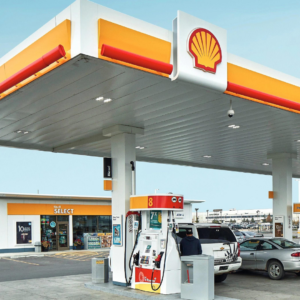
Gas stations: Gas stations have attracted net lease investors for years, drawing in buyers who are looking to diversify their portfolios with passive cash flow and reputable tenants. The inventory of gas stations includes a wide range of price points and can include a variety of brand names, such as Exxon, 7-Eleven, and AMPM. “Gas stations are an integral part of our country’s infrastructure. They are often built in prime locations and designed to maximize traffic flow. They provide an essential service that has proven steady through economic fluctuations, e-commerce upheaval, and even a global pandemic,” says Spencer Henderson, a director at B+E.
According to B+E, key market highlights related to gas stations/C-stores include:
- Gas stations/C-stores typically sell for prices between $1.5 million and $4 million.
- Yields in the gas station space have increased between 50 to 100 basis points over the past year, with cap rates that depend on the location and credit of the operator.
Car washes: The popularity of car washes within the net lease market has continued to grow among investors as the market has both expanded and matured. “The car wash space is becoming more and more investible as operators are getting larger and credit quality is rising,” says Camille Renshaw, CEO & Co-Founder of B+E. More car wash owners are scaling up in an industry that, just a few years ago, was primarily dominated by single-location operators. Groups that were 50 units 18 months ago are now at 75-80 units, with expansion coming from greenfield development and M&A activity.
Another factor that investors find attractive is that operations are more automated these days with newer equipment that offer good opportunities for depreciation. Car washes also tend to include annual rent escalations, which is a differentiating point when underwriting transactions. According to B+E, key market highlights related to car washes include:
- There were 170+ car washes on the market as of Aug. 1, 2023.
- The average listed price for car washes is $5.1 million with an average asking cap rate of 6.09%.
Is my property eligible?
It is always advisable to speak with an accountant or CPA to fully understand the tax advantages of bonus depreciation relative to your specific situation. One general rule of thumb for both car washes and gas stations is that an eligible property must be acquired and placed in service after September 27, 2017. Effectively, this goes back to the original purpose of the tax provision, which is to incentivize investment in “new” equipment and properties. Another caveat is that bonus depreciation applies only to buildings and equipment and excludes land value.
Gas stations in particular have specific qualifiers. The IRS released Coordinated Issue Papers (CIP) in the late 1990s for Petroleum and Retail Industries Convenience Stores that provides a detailed definition and qualifying criteria. As per the CIP, a gas station will qualify as a “retail motor fuel outlet” if it meets any of the three following criteria:
- 50 percent or more of its gross revenues generated from petroleum sales.
- 50 percent or more of its floor space is devoted to petroleum marketing or sales.
- The gas station/convenience store building is 1,400 square feet or less.
Outlook: Limited window or chance of extension?
Notably, there has been legislation introduced that could potentially extend the bonus depreciation tax provision. The Built in America Act introduced in June included a provision that would extend bonus depreciation at the 100 percent level through January 1, 2027.
It remains to be seen whether or not Congress will approve such an extension. For now, there is a clear timeline in play that creates an incentive for investors to act sooner rather than later to maximize their tax savings.
Contact B+E:
FAQ
Do I need to operate the car wash or gas station I purchase myself?
No, an investor is buying the real estate with an operator in place. Properties are structured with a net lease, which typically puts the operator in charge of day-to-day management of the property and creates a passive investment for the net lease property owner.
How do I know if my property gas station or car wash qualifies for bonus depreciation? (Duplicate from what is included in the article, but this would be good to repeat if you have a separate FAQ link or list.)
It is always advisable to speak with an accountant or CPA to fully understand the tax advantages of bonus depreciation relative to your specific situation. One general rule of thumb for both car washes and gas stations is that an eligible property must be acquired and placed in service after September 27, 2017. Effectively, this goes back to the original purpose of the tax provision, which is to incentivize investment in “new” equipment and properties. Another caveat is that bonus depreciation applies only to buildings and equipment and excludes land value.
Gas stations in particular have specific qualifiers. The IRS released Coordinated Issue Papers (CIP) in the late 1990s for Petroleum and Retail Industries Convenience Stores that provides a detailed definition and qualifying criteria. As per the CIP, a gas station will qualify as a “retail motor fuel outlet” if it meets any of the three following criteria:
- 50 percent or more of its gross revenues generated from petroleum sales.
- 50 percent or more of its floor space is devoted to petroleum marketing or sales.
- The gas station/convenience store building is 1,400 square feet or less.
Could bonus depreciation tax law be extended beyond 2027?
Maybe. The current depreciation level of 80 percent in 2023 will drop to 60 percent in 2024, 40 percent in 2025, and 20 percent in 2026 before phasing out entirely on January 1, 2027. However, new legislation proposed in June 2023 as part of the Built in America Act would extend bonus depreciation on assets, including car washes and gas stations,for up to 100 percent through January 1, 2027. It remains to be seen if Congress will approve or modify that extension.
B+E Insights:
Test Post 1- Net lease guide
Lorem ipsum dolor sit amet, consectetur adipiscing elit. Proin rhoncus quam vel nunc vestibulum, vitae fermentum libero malesuada.Lorem ipsum dolor sit amet, consectetur adipiscing
Read More »