

Is Industrial Still a Bulletproof Sector?
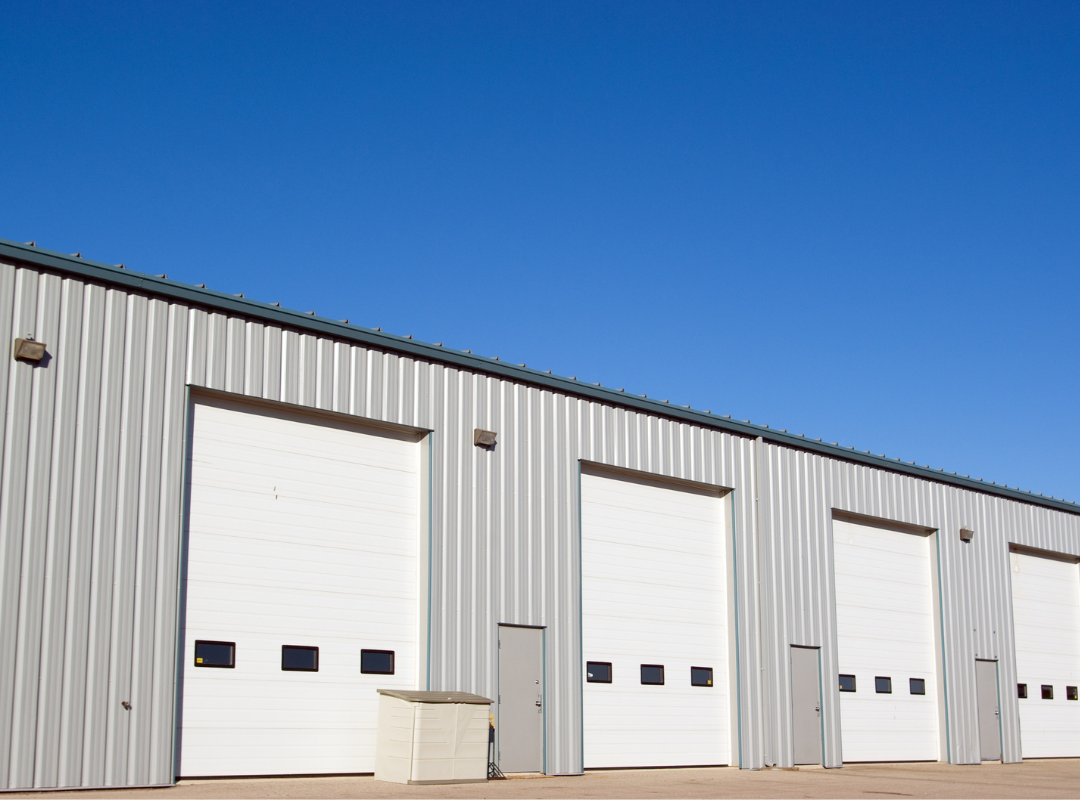
Is Industrial Still a Bulletproof Sector?
Amid strong fundamentals, buyers are shifting acquisition criteria to focus on higher-yielding assets.
The industrial asset class has been riding high on a huge wave of tenant and investor demand, but it may be coming back down to earth after posting sluggish numbers in Q3. However the sector is remains a favored property type among net lease investors.
The rise of e-commerce and the need to build more efficient supply chains have stoked a voracious investor appetite for industrial assets in recent years. That demand has put significant downward pressure on cap rates that are now moving higher in the wake of interest rate hikes and stricter lending standards. “Industrial is still one of the strongest asset classes, if not the strongest,” says William Brooks, an Associate Director at B+E.
During the pandemic, industrial was the darling of the commercial real estate market, experiencing record-high levels of construction activity and absorption, with many markets seeing double-digit rent growth. Although tenant demand for industrial space is pulling back to more normalized levels, there continues to be a steady demand fueled by e-commerce, the reconfiguration of supply chains, and the reshoring of manufacturing.
Higher interest rates and slower economic growth, though, are taking some of the wind out of the sails of industrial expansion. Vacancies have been inching higher, with current estimates ranging between 3.7% and 4.2%, depending on the source. However, those vacancy levels remain well below historical averages. Although rent growth is expected to moderate, it has – so far – remained incredibly strong.
“The industrial market is coming back down to Earth, but an important distinction is that key metrics – occupancies and rent growth – are still above pre-pandemic levels,” says Brooks. The record pace of construction experienced over the last few years is now slowing due to higher building costs and a more challenging financing environment. That slowdown will help absorption catch up to new supply that has been delivered, which bodes well for fundamentals to remain strong over the near term.
Although much of the industrial story in recent years has focused on the explosive growth of e-commerce, manufacturing companies that are reshoring operations back to the U.S. are providing another big tailwind that is driving demand for industrial space. For example, construction spending on manufacturing facilities in the U.S. totaled $202 million in July alone – a year-over-year increase of more than 70%, according to the U.S. Census Bureau. EV manufacturing in particular has seen a surge in expansion activity. Since 2001, manufacturers have quadrupled their announced EV manufacturing and battery investments in the U.S.
Key trends:
- Demand for industrial space is pulling back from record highs, but vacancies remain below the historical average.
- Construction starts are going to slow down at the end of this year. Moving into 2024, the industrial sector will likely experience a short period of oversupply, followed by a more supply-constrained market by the end of 2024 once much of the new space has been absorbed.
- Although e-commerce has been a huge driver behind the absorption of logistics, warehouse, and distribution space, the reshoring of manufacturing operations back to the U.S., led by the EV sector, is also generating demand for industrial space.
Investor appetite for industrial
Buyers still like the fundamentals and demand-drivers backing industrial assets. Industrial buyers run the spectrum from individuals and family offices to institutions, REITs, and private equity funds, many of which have raised capital for industrial assets and need to get money out the door. However, the sticking point is the price.
The big question for net lease buyers and sellers is how do current market trends impact cap rates? Although there are still some aggressive deals getting done, in general, higher interest rates are putting upward pressure on cap rates. Typically, the lower cap rate sales have a story behind them with a buyer that expects to generate future upside, such as an ability to significantly raise rents with a tenant rollover. Higher construction costs, and therefore higher replacement costs, also creates a bit of a floor on pricing that helps protect buyers.
“The challenge for buyers is is a lack of quality assets on the for-sale market, but when investors do find a quality asset, they’re still trading at a premium,” says Brooks. In particular, best-in-class assets are Class A, newer construction properties located in primary markets with investment grade tenants that have committed to a long-term lease. For example, a Lowe’s Distribution Center sold in Savannah, GA, in Q3 2023 for a 4.5% cap rate.
Buyers are chasing yield
Value-add strategies are more attractive in the higher interest rate environment. For example, buyers are going after net lease properties that have less term remaining on the lease where they believe they can re-tenant properties at a higher rent. Buyers are also going into secondary and tertiary markets that offer higher cap rates. Instead of buying an asset in Atlanta, they might be willing to consider Macon, GA, or they may be willing to look at a private credit company versus an investment grade.
In another example, B+E represented both the seller, a developer, and a 1031 buyer on a net lease industrial property in Madison, WI. The property was a newly built, state-of-the-art facility occupied by an investment grade tenant on a long-term lease with annual rent escalations. The buyer was willing to pay a 6.5% cap rate because they felt that the facility was mission critical for the tenant and had a high probability of long-term occupancy. They also liked the fundamentals and growth potential of the market.
“Value-add groups that are willing to get their hands dirty, such as more management responsibilities or more leasing risk, are getting rewarded with higher yields and lower exit cap rates,” says Brooks.
Buyers like assets that can accommodate future expansion or outdoor storage for vehicles and equipment. Buyers are also looking for opportunities that come with assumable debt or seller financing to help make deals pencil-out in the current high interest rate environment.
Key Trends
- The hunt for yield is fueling interest in value-add properties.
- Investors are willing to consider tertiary markets or shorter lease terms in exchange for higher cap rates.
- Industrial buildings that have space for outdoor storage or room for expansion are in demand.
- Buyers are looking for opportunities that come with assumable debt or seller financing to help make deals pencil out in the current high interest rate environment.
Limited inventory of credit for-sale assets
Buyers are frustrated by a shortage of good buying opportunities. Owners who don’t have to sell right now are content to hold on to assets unless there is a situation where they are facing maturing debt or some other event that could trigger a sale. Additionally, the subdued pace of M&A is resulting in fewer large sale-leaseback transactions. However, there is activity occurring in middle market and smaller-scale deals.
In addition, owner-operators continue to recognize sale-leasebacks as a strategy to access needed capital in a more challenging financing market. Although pricing may not be as favorable as it was in early 2022, a sale-leaseback is still an attractive option for owners relative to other sources of capital, such as a traditional mortgage or bank loan. Owners doing a sale-leaseback get the added advantage of being able to unlock 100% of their equity from a property versus a mortgage that might be done at a 50% to 60% LTV in the current market.
Good assets tend to get snatched up quickly, and deals are getting done off-market. “Especially with higher quality assets, we’re getting offers on deals before we can get them to the market,” says Brooks.
The key takeaway for both buyers and sellers is that industrial market fundamentals are holding up incredibly well, and there is still strong buyer demand for industrial assets. Although buyers are price-sensitive in the higher interest rate environment, they are willing to be aggressive for best-in-class assets and take more risk in exchange for strategies that deliver higher returns.